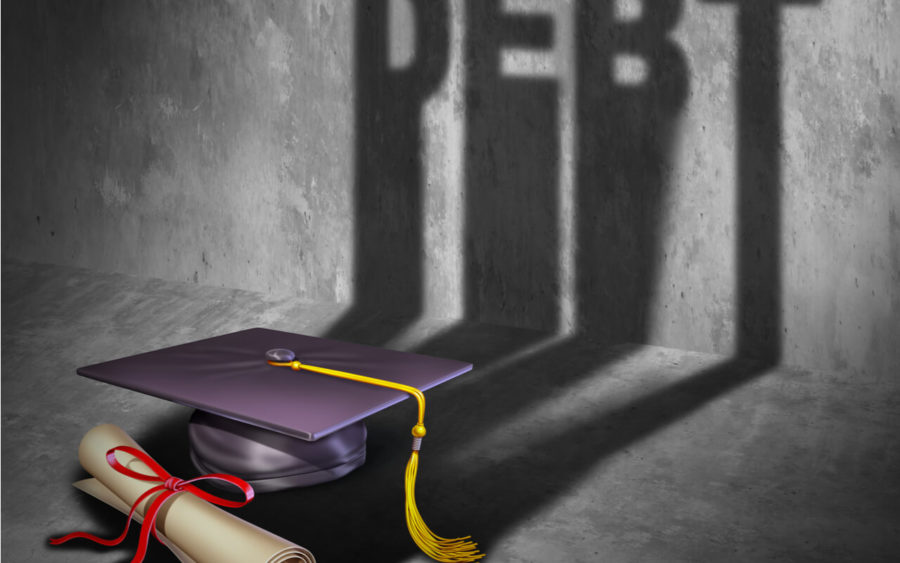
OCCUPY STUDENT DEBT

Student debtor stories submitted by the 99%

Thieves - Art Institute of Pittsburgh Online 


In 2007, I was laid off.  I was looking for a  class online to teach me Autocad, to enhance my marketability.  No one  would offer this course as a stand-alone class.  I ended up enrolling  with The Art Institute of Pittsburgh Online.  They helped me apply for  and get a loan from Sallie Mae.  There was a computer skills class  required before they would enroll me in the courses with which I was  interested.  The first time I started the course, they were unable to  provide me with study materials in time.  I dropped that course and  re-enrolled the following quarter.  This time When I contacted the book  store to get my materials,  they told me that they would cost $300.  I  responded that I was on a student loan program and the materials should  be on a voucher that the loan paid for.. Their response was that those  materials could not be on a voucher because they were not on the  “required materials” list provided to them.  I stated that the preamble  for the course when I logged in clearly stated that those materials were  required.  They said “too bad”, if it wasn’t on their list, their hands  were tied.  I E-mailed the instructor and she verified that those  materials were needed to complete the course work.  I E-mailed the  Director of Financial Assistance and that person was of no assistance at  all.  Basically I had started and failed the class three times.  Since  the school has to return the monies for incomplete courses, I had to pay  the school for the hours that I did participate in the course.  That totaled approx.  $1650. dollars.  I decided that because the school was  so unprofessional, I did not wish to continue with them.. Several  months later, Sallie Mae contacted me saying I owed them $3800.  They  told me that the school had not returned the money for the classes that I  was not going to take.  When I talked to the school, they just gave me  the runaround.  They would refer it to accounting and get back to me.   No one ever got back to me, no one would respond to my repeated phone  calls and E-mails.  I know I can apply to have the loan forgiven because  the school did not provide the services for which the loan was given,  however, they still have the Government’s money.  As a taxpayer, I found  this appalling.  It finally dawned on me that only option for me was to  do all I could to discredit the school and prevent them from being eligible for student loans.  

Thieves - Art Institute of Pittsburgh Online

In 2007, I was laid off.  I was looking for a class online to teach me Autocad, to enhance my marketability.  No one would offer this course as a stand-alone class.  I ended up enrolling with The Art Institute of Pittsburgh Online.  They helped me apply for and get a loan from Sallie Mae.  There was a computer skills class required before they would enroll me in the courses with which I was interested.  The first time I started the course, they were unable to provide me with study materials in time.  I dropped that course and re-enrolled the following quarter.  This time When I contacted the book store to get my materials,  they told me that they would cost $300.  I responded that I was on a student loan program and the materials should be on a voucher that the loan paid for.. Their response was that those materials could not be on a voucher because they were not on the “required materials” list provided to them.  I stated that the preamble for the course when I logged in clearly stated that those materials were required.  They said “too bad”, if it wasn’t on their list, their hands were tied.  I E-mailed the instructor and she verified that those materials were needed to complete the course work.  I E-mailed the Director of Financial Assistance and that person was of no assistance at all.  Basically I had started and failed the class three times.  Since the school has to return the monies for incomplete courses, I had to pay the school for the hours that I did participate in the course.  That totaled approx.  $1650. dollars.  I decided that because the school was so unprofessional, I did not wish to continue with them.. Several months later, Sallie Mae contacted me saying I owed them $3800.  They told me that the school had not returned the money for the classes that I was not going to take.  When I talked to the school, they just gave me the runaround.  They would refer it to accounting and get back to me.  No one ever got back to me, no one would respond to my repeated phone calls and E-mails.  I know I can apply to have the loan forgiven because the school did not provide the services for which the loan was given, however, they still have the Government’s money.  As a taxpayer, I found this appalling.  It finally dawned on me that only option for me was to do all I could to discredit the school and prevent them from being eligible for student loans.  

Sallie Mae changed my status between semesters and capitalized my interest

While in school for 4 straight years Sallie Mae changed my status between semesters and capitalized my interest making a $60k loan balloon to $100k. Saying that my “status” changed. It didn’t I was in school and it should have been an in school deferment. That is on my private loans. That’s criminal.

How Will Student Debt Affect You?
As President Obama noted in his State of the Union address in January,  total student loan debt in the country is $1 trillion and now exceeds  total credit card debt.  What does this high level of debt mean for  today’s students and recent graduates? Obama has proposed some  solutions, but are they enough to fix the problem?
How much student loan debt did you or will you graduate from college  with? Tell us when you graduated or will graduate and which school you  attended or attend. Approximately what percentage of your total college  expenses were financed with loans?
Click HERE to answer!

How Will Student Debt Affect You?

As President Obama noted in his State of the Union address in January, total student loan debt in the country is $1 trillion and now exceeds total credit card debt. What does this high level of debt mean for today’s students and recent graduates? Obama has proposed some solutions, but are they enough to fix the problem?

How much student loan debt did you or will you graduate from college with? Tell us when you graduated or will graduate and which school you attended or attend. Approximately what percentage of your total college expenses were financed with loans?

Click HERE to answer!

Harvard Law was supposed to be the golden ticket

I wanted to be a lawyer my whole life, and not just a lawyer but a real mover and shaker…a representative of the people and a protector of their rights. So while my friends were out enjoying parties and their youth, I was working my butt off to bolster my transcripts and extra curriculars. I made my way into Cornell and graduated at the top of my class. My reward was my acceptance to Harvard Law. I knew I would have to work my way through school, and go into significant debt, but my dream was worth it. After all, I had always been assured that hard work and education paid off, and the financial advisers at HLS showed me lists of expected starting salaries well into the 6-figure range. What I didn’t count on however was developing a health issue during my 2nd year which would impact my ability to hold down a demanding job for several years, nor did I count on the job market collapsing so that when I was finally able to return to work full time, there would be no offers on the table. Now I hold a worthless diploma in one hand, and student loan bills totaling over $200k in the other. One loan is already in default, the other is not far behind. I’ve spent my last 3 years working at a job for which I’m massively overqualified, literally begging for (and being denied) raises and promotions to full-time status, not because of poor performance, but because there are enough people in line for my job that my employer has no incentive to provide me with better. My annual income is now less than I paid in tuition for a single year at school, and I cry myself to sleep nights wondering what happened to the life I had planned. Going to a top school was supposed to be a guaranteed investment in my future, but the payout disappeared when the lenders sunk our economy, and now the loans are a constant weight to drag me down…a weight I don’t see myself ever being able to shed.

Sallie Mae Sounds Like, But Is Not, A Nice Farmgirl

It’s not really about the money for me, I don’t have any money. It’s more about the education I sought and did not get. My first day of college was 9/11, after which the atmosphere of the small New York liberal arts college that sold me the Sallie Mae loan suddenly degenerated to something other than educational. A political disagreement with a professor led him to deny me credit, which led the college to reduce my scholarship, which led to the early demise of my academic life. Ten years of marginal living and a few sporadic payments later, I hold a threatening default collection letter from NYSHESC, and I still have difficulty believing that I owe them anything, since the education I was paying for was not made available to me after my freshman year. Add to this the frustration of going through endless deferment processes at the advice of Sallie’s outsourced Indonesian phone operators, only to have my many applications lost, ignored, and denied. Add to this the endless midnight robo-calls, and that I already suffer from lifelong bouts with insomnia. Add to this that I have not given up, and have attended school several times since, always being required to take out more loans, and each time receiving little or nothing of value from these paradoxical government-accredited/corporate-money-ruled educational institutions. This is the making of an occupier. I attend full-time at the school of life now, working in my local community, volunteering and working on organic farms, learning life-skills from people who never went to college. My life is good, I’m not complaining. I just don’t see any validity in a contract I signed at the age of 18, before I had any way of knowing what would then happen to my country, or how far I would have to wander beyond the university system before I found my real education. I wonder how much they’ve profited from SLABS-trading of my loan over the last ten years? I wonder if NYSHESC will try to repossess my shovel and work gloves? Perhaps I can pay them in beets?

Classic Sallie Mae Negotiations

Photobucket

Options Sallie Mae has given me in order to pay my loan:

1. Borrow from friends and family - $60,000 + 18 percent interest by the way.

2. Take out another private loan and use it to pay the current private loan.

3. Fill out a bunch of applications for credit cards, and pay the loan with those. (My credit score is below 500 due to Sallie Mae - so I either can’t get a credit card / or can get me one with an interest rate of 35 percent or higher)

4. Intentionally hurt myself or fill out a false accident claim so I can cash in on a settlement. (This is an honest to god suggestion from a Sallie Mae employee.)

5. Don’t pay my rent or buy groceries for the month. But pay my phone so Sallie Mae can continue to call me ten times a day.

6. Sell my car, all my personal possessions, and clothing so I can bring my account current and at least get just a small fraction the interest out of the way. 

7. Quit college now and take up two or three jobs. Yes, Sallie Mae asked me to do the right thing and give up. 

8. Ask neighbors, people I don’t know around me, if they would be willing to pitch in and help me out. Other wise Sallie Mae would call them and do it for me. 

9. Garnish my wages. My wages are student loans. 

10. Call me ten times a day. As if in between hours I’m some how going to magically have sixty thousand dollars. 

11. Got to love the forbearance fee. In all honesty I’m still paying considering my interest is compounding during the times the forbearance is in “effect.”

Al lord, seriously? I get it. Who doesn’t want a nice yacht, a mansion and their own personal golf course. But what is that going to mean ten years from now when you need a doctor, and there aren’t any because you pissed on all of them? What about science breakthroughs? Your yacht isn’t going to build itself. How are you going to purchase the latest high tech car or gadget when America’s engineers are all stuck working retail? Pilots. Whose going to fly you in your private jet to your favorite vacation spots around the world? YOU? There are only a small handful of people like you out there right now, Al Lord. You could do so many great things with your money and your choosing not to. The American people don’t want to be filthy rich, they just want their shot. America possesses a vast range of diverse and talented people that could change the world as we know it. Al Lord, your not one of them. Its a travesty that some one that has nothing to offer gets to make the decisions. 

We’re all putting together book reviews for books involving higher education and student debt.  Many reviews are coming soon!

How The Education of Millionaires Can Bring Hope to an Ailing Nation
By Anthony Mychal
Stuck under student debt? Can’t find a job? Regret your decision to attend college? There’s good news: It’s not too late. At least, that’s the thinking of Michael Ellsberg, author of The Education of Millionaires: It’s Not What You Think and It’s Not Too Late. Whether you’re a teenager with collegiate ambitions, a jobless twenty-something living in your parent’s basement, or a thirty year old touring third world countries to lower the cost of living, The Education of Millionaires is a must read.
The title, Education of Millionaires, does little justice to Ellsberg’s work. Don’t be fooled. It isn’t a get rich quick scheme. It’s not even in the same ballpark. The book is simply about how select millionaires and billionaires made it big. The catch? They aren’t your ordinary millionaires and billionaires. They are the ones that never finished college.
It’s filled with detailed interviews and insights from notable entrepreneurs and personalities such as Peter Thiel (co-founder of PayPal), Dustin Moskovitz (co-founder of Facebook), and Marc Ecko (founder of Marc Eckō Enterprises). But make no mistake; Education of Millionaires is more than a conglomeration of interviews. And Ellsberg realizes that not everyone wants to be, or will succeed as, an entrepreneur. So don’t get discouraged if that’s not your thing, as there is plenty of valuable information for all interests.
Perhaps the best way to describe the book is with a phrase echoed long ago by Mark Twain: “I’ve never let my school interfere with my education.” Do you remember sitting through four years of high school and asking yourself, “What am I going to use this information for when I grow up?” And then sitting through two years of undergraduate school and asking yourself, “Isn’t this the same stuff that I’m not going to use after I graduate?” And then surviving those last two years of undergrad and asking yourself, “Will I even use this?”
Ellsberg remembers those years. And it’s safe to say Education of Millionaires contains what schools should be teaching. It’s the education you never had, but always wanted. And it’s boiled into seven success skills—all equally unlikely to appear in the public schooling curriculum. These seven skills are what separate the self made from those that fade. The self made realized—somehow, someway—that “street smarts” were more valuable than “book smarts,” and they went out and learned for themselves. See that? They learned. Even without school. What a crazy concept.
Ellsberg says that the traditional picture of people dropping out of school, having no career options, and living in a garbage can simply isn’t true. And he backs this up by differentiating between dropping out of school and dropping out of learning.
*
Seth Godin, bestselling author and genius of all things marketing, says that average is for losers. Yet the idea of primary, secondary, and higher education is rooted in building average people willing to do average things for average pay. And we willingly accept this fate. We’re told to go to school, get a secure job, start a family, and live a happy life behind a picket fence. We go to college in hopes of not upsetting the world. Whatever happened to wanting to make a difference? Wanting to change the world?
What they don’t tell you is that you will remortgage your house, sell your picket fence, and feed Spot scraps for dinner just to keep up with your bills. And they don’t tell you because they can’t. Their concept of life is formulated having lived during the industrial age. But the industrial age is over.
Although Ma and Pa just want you healthy and happy with a stable job and a pension waiting, this just is no longer reality. The rules have changed. Student loan sums and interest rates are climbing, and the twenty-three year old college graduate isn’t walking into executive positions anymore. Hell, they’re not even walking into entry level positions. They’re barristaing at Starbucks, living in their parent’s basement, and working to mitigate student debt.
Millions of students that make it through the once touted higher education system are coming out at the bottom, realizing that—by law—student debt is a life sentence. Hardly civil in a world where a fifty year old can accumulate credit card debt with vain and materialistic purchases, only to have the debt absolved in a bankruptcy settlement.
Big money companies like Sallie Mae are trapping the youth, forcing them to sign documents that are knowingly beyond their comprehension that essentially say this: as long as you’re alive, you will be indebted to me.
So how can a rational fifty year old that overindulges on materialistic things have an escape route when a eighteen year old kid, fulfilling society’s expectations and hoping to be rewarded with numerous career possibilities, be stuck for the rest of his or her life? Especially when accumulating the debt isn’t living up to the purported reward?
Ellsberg is adamant enough about this issue to print the following in full capital letters: “WHEN ARE WE GOING TO START GIVING OUR YOUNG PEOPLE BETTER CAREER ADVICE?” And my equally important question is, when are we going to start telling young people what to expect after college?
The system is broke. “It’s the end of the industrial age,” Seth Godin explains, “It lasted for eighty years. For eighty years you got a job, you did what you were told, and you retired. And good people could make above average pay for average work. And it ended. [The world is]…Totally unprepared. Absolutely. Because our schools, our systems, our retirement things, our taxes are all built around this notion of doing what you’re told.”
People are now realizing that following both orders and societal standards is landing them in an endless pile of debt without yielding tangible returns. Ellsberg claims that this can only go on for so long before something gives. The education bubble will burst.
*
What should I do? What jobs are there? How should I prepare? Which jobs should I prepare for? Is vocational school better? According to Ellsberg, this thinking is dysfunctional. The people that narrow themselves into one job—or even one field—won’t be suited to thrive because the very jobs that exist now won’t in five to ten years. “The courses in this book prepare you for success in any job,” Ellsberg explains, “Including jobs we can’t even imagine because they don’t exist yet. It is a completely adaptable set of personal and professional skills for life in the real world, applicable under any market conditions, any economic landscape, and any personal circumstances.”
Perhaps the most valuable skill, which appears as the seventh success skill in Education of Millionaires, isn’t much of a skill at all, but rather a mentality. Ellsberg differentiates between the employee mindset and the entrepreneurial mindset, saying that the employee mindset is poison. It subconsciously says things like: I went to school, I deserve a job. It’s not my fault for being unemployed. It’s not my job to do “x,” because I’m only “y.”
The entrepreneurial mindset, however, allows college drop outs to become millionaires. It takes responsibility for actions, regardless of fault. It works itself into promotions. It makes decisions, even without authority’s nod. But don’t get confused. The entrepreneurial mindset isn’t reserved for entrepreneurs. It’s a mindset, a way of approaching life. According to both Ellsberg and Godin, the public schooling system doesn’t teach the entrepreneurial mindset. It instead primes students for being an average cog in society that doesn’t question authority and embraces their role as a remedial worker. In other words, schools are teaching us how to fail.
*
The American Dream used to represent freedom and prosperity. Now, the American Dream is more so not having student loan payments. But the good news is that the true American Dream is as tangible as it has ever been. With the internet and plummeting cost of technology, businesses can start easier than ever. According to Tony Hseih, CEO of Zappos, older businesses were more dependent on outside funding because internet and server costs could creep to $50,000 per month. Now, better servers and internet service can be had for a mere $50 per month.
The Age of Opportunity is upon us. Yet kids are still droned into higher education to get a “safe” job. But in 2009, Adobe Systems laid off 9% of its workers. Sprint Nextel laid off 2,500 workers. Microsoft laid off 8,500 workers. Cisco laid off 2,000 workers. Logitech cut 15% of salaried employees. In 2010, the US Postal Service cut 30,000 jobs. Verizon cut 13,000 employees. The Illinois Public School System cut 8,130 teachers. California fired over 20,000 of their teachers. In 2012, Pennsylvania cut more than 14,000 education jobs. Delta Air Lines bought out 2,000 workers. Research in Motion (creators of the Blackberry) cut 11% of its workforce. Pfizer cut 5,530 employees. Borders, 10,700.
Safety? Security? No. Quite the opposite. And it’s only a matter of time before the world realizes that the once safe, comfortable, and prestigious confine of higher education is now one of the riskiest endeavors for a student. But for those of us that already carry student debt around our belt, we owe it to future generations to tell them what truly waits after college. And we owe it to ourselves to adopt an entrepreneurial mindset, positioning ourselves for success in the new economy. So no matter if you are in a little debt, in a lot of debt, comfortably paying off your debt, or a freshman not yet in debt, remember, it’s not too late.

Anthony Mychal is a writer and online fitness consultant from Pittsburgh, Pennsylvania. You can visit his personal website at http://anthonymychal.com. To contact him for questions and services, send an e-mail to: anthony.mychal@gmail.com.

We’re all putting together book reviews for books involving higher education and student debt.  Many reviews are coming soon!

How The Education of Millionaires Can Bring Hope to an Ailing Nation

By Anthony Mychal

Stuck under student debt? Can’t find a job? Regret your decision to attend college? There’s good news: It’s not too late. At least, that’s the thinking of Michael Ellsberg, author of The Education of Millionaires: It’s Not What You Think and It’s Not Too Late. Whether you’re a teenager with collegiate ambitions, a jobless twenty-something living in your parent’s basement, or a thirty year old touring third world countries to lower the cost of living, The Education of Millionaires is a must read.

The title, Education of Millionaires, does little justice to Ellsberg’s work. Don’t be fooled. It isn’t a get rich quick scheme. It’s not even in the same ballpark. The book is simply about how select millionaires and billionaires made it big. The catch? They aren’t your ordinary millionaires and billionaires. They are the ones that never finished college.

It’s filled with detailed interviews and insights from notable entrepreneurs and personalities such as Peter Thiel (co-founder of PayPal), Dustin Moskovitz (co-founder of Facebook), and Marc Ecko (founder of Marc Eckō Enterprises). But make no mistake; Education of Millionaires is more than a conglomeration of interviews. And Ellsberg realizes that not everyone wants to be, or will succeed as, an entrepreneur. So don’t get discouraged if that’s not your thing, as there is plenty of valuable information for all interests.

Perhaps the best way to describe the book is with a phrase echoed long ago by Mark Twain: “I’ve never let my school interfere with my education.” Do you remember sitting through four years of high school and asking yourself, “What am I going to use this information for when I grow up?” And then sitting through two years of undergraduate school and asking yourself, “Isn’t this the same stuff that I’m not going to use after I graduate?” And then surviving those last two years of undergrad and asking yourself, “Will I even use this?”

Ellsberg remembers those years. And it’s safe to say Education of Millionaires contains what schools should be teaching. It’s the education you never had, but always wanted. And it’s boiled into seven success skills—all equally unlikely to appear in the public schooling curriculum. These seven skills are what separate the self made from those that fade. The self made realized—somehow, someway—that “street smarts” were more valuable than “book smarts,” and they went out and learned for themselves. See that? They learned. Even without school. What a crazy concept.

Ellsberg says that the traditional picture of people dropping out of school, having no career options, and living in a garbage can simply isn’t true. And he backs this up by differentiating between dropping out of school and dropping out of learning.

*

Seth Godin, bestselling author and genius of all things marketing, says that average is for losers. Yet the idea of primary, secondary, and higher education is rooted in building average people willing to do average things for average pay. And we willingly accept this fate. We’re told to go to school, get a secure job, start a family, and live a happy life behind a picket fence. We go to college in hopes of not upsetting the world. Whatever happened to wanting to make a difference? Wanting to change the world?

What they don’t tell you is that you will remortgage your house, sell your picket fence, and feed Spot scraps for dinner just to keep up with your bills. And they don’t tell you because they can’t. Their concept of life is formulated having lived during the industrial age. But the industrial age is over.

Although Ma and Pa just want you healthy and happy with a stable job and a pension waiting, this just is no longer reality. The rules have changed. Student loan sums and interest rates are climbing, and the twenty-three year old college graduate isn’t walking into executive positions anymore. Hell, they’re not even walking into entry level positions. They’re barristaing at Starbucks, living in their parent’s basement, and working to mitigate student debt.

Millions of students that make it through the once touted higher education system are coming out at the bottom, realizing that—by law—student debt is a life sentence. Hardly civil in a world where a fifty year old can accumulate credit card debt with vain and materialistic purchases, only to have the debt absolved in a bankruptcy settlement.

Big money companies like Sallie Mae are trapping the youth, forcing them to sign documents that are knowingly beyond their comprehension that essentially say this: as long as you’re alive, you will be indebted to me.

So how can a rational fifty year old that overindulges on materialistic things have an escape route when a eighteen year old kid, fulfilling society’s expectations and hoping to be rewarded with numerous career possibilities, be stuck for the rest of his or her life? Especially when accumulating the debt isn’t living up to the purported reward?

Ellsberg is adamant enough about this issue to print the following in full capital letters: “WHEN ARE WE GOING TO START GIVING OUR YOUNG PEOPLE BETTER CAREER ADVICE?” And my equally important question is, when are we going to start telling young people what to expect after college?

The system is broke. “It’s the end of the industrial age,” Seth Godin explains, “It lasted for eighty years. For eighty years you got a job, you did what you were told, and you retired. And good people could make above average pay for average work. And it ended. [The world is]…Totally unprepared. Absolutely. Because our schools, our systems, our retirement things, our taxes are all built around this notion of doing what you’re told.”

People are now realizing that following both orders and societal standards is landing them in an endless pile of debt without yielding tangible returns. Ellsberg claims that this can only go on for so long before something gives. The education bubble will burst.

*

What should I do? What jobs are there? How should I prepare? Which jobs should I prepare for? Is vocational school better? According to Ellsberg, this thinking is dysfunctional. The people that narrow themselves into one job—or even one field—won’t be suited to thrive because the very jobs that exist now won’t in five to ten years. “The courses in this book prepare you for success in any job,” Ellsberg explains, “Including jobs we can’t even imagine because they don’t exist yet. It is a completely adaptable set of personal and professional skills for life in the real world, applicable under any market conditions, any economic landscape, and any personal circumstances.”

Perhaps the most valuable skill, which appears as the seventh success skill in Education of Millionaires, isn’t much of a skill at all, but rather a mentality. Ellsberg differentiates between the employee mindset and the entrepreneurial mindset, saying that the employee mindset is poison. It subconsciously says things like: I went to school, I deserve a job. It’s not my fault for being unemployed. It’s not my job to do “x,” because I’m only “y.”

The entrepreneurial mindset, however, allows college drop outs to become millionaires. It takes responsibility for actions, regardless of fault. It works itself into promotions. It makes decisions, even without authority’s nod. But don’t get confused. The entrepreneurial mindset isn’t reserved for entrepreneurs. It’s a mindset, a way of approaching life. According to both Ellsberg and Godin, the public schooling system doesn’t teach the entrepreneurial mindset. It instead primes students for being an average cog in society that doesn’t question authority and embraces their role as a remedial worker. In other words, schools are teaching us how to fail.

*

The American Dream used to represent freedom and prosperity. Now, the American Dream is more so not having student loan payments. But the good news is that the true American Dream is as tangible as it has ever been. With the internet and plummeting cost of technology, businesses can start easier than ever. According to Tony Hseih, CEO of Zappos, older businesses were more dependent on outside funding because internet and server costs could creep to $50,000 per month. Now, better servers and internet service can be had for a mere $50 per month.

The Age of Opportunity is upon us. Yet kids are still droned into higher education to get a “safe” job. But in 2009, Adobe Systems laid off 9% of its workers. Sprint Nextel laid off 2,500 workers. Microsoft laid off 8,500 workers. Cisco laid off 2,000 workers. Logitech cut 15% of salaried employees. In 2010, the US Postal Service cut 30,000 jobs. Verizon cut 13,000 employees. The Illinois Public School System cut 8,130 teachers. California fired over 20,000 of their teachers. In 2012, Pennsylvania cut more than 14,000 education jobs. Delta Air Lines bought out 2,000 workers. Research in Motion (creators of the Blackberry) cut 11% of its workforce. Pfizer cut 5,530 employees. Borders, 10,700.

Safety? Security? No. Quite the opposite. And it’s only a matter of time before the world realizes that the once safe, comfortable, and prestigious confine of higher education is now one of the riskiest endeavors for a student. But for those of us that already carry student debt around our belt, we owe it to future generations to tell them what truly waits after college. And we owe it to ourselves to adopt an entrepreneurial mindset, positioning ourselves for success in the new economy. So no matter if you are in a little debt, in a lot of debt, comfortably paying off your debt, or a freshman not yet in debt, remember, it’s not too late.

Anthony Mychal is a writer and online fitness consultant from Pittsburgh, Pennsylvania. You can visit his personal website at http://anthonymychal.com. To contact him for questions and services, send an e-mail to: anthony.mychal@gmail.com.